
 >
>
What Is an Ultrasound-Guided Interventional Injection? Applications and Treatment Process
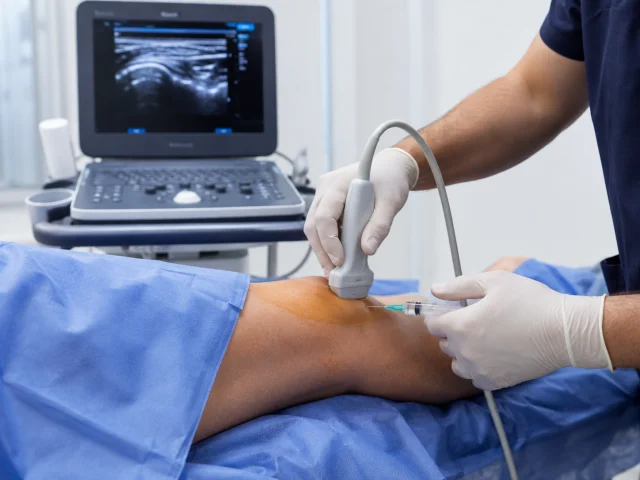
Ultrasound-guided interventional injections are procedures performed with the assistance of ultrasound imaging as part of musculoskeletal and pain management treatments. Ultrasound allows the targeted anatomical structures to be visualized in real time during the procedure, helping guide the needle toward the appropriate area.
Following a comprehensive evaluation by Dr. Buliana Çankaya, MD, the patient's symptoms, physical examination findings, and any necessary imaging studies are assessed together to determine appropriate treatment options. In this article, you can find detailed information about ultrasound-guided interventional injections, their potential applications, the procedure, and important considerations before and after treatment.
What Is an Ultrasound-Guided Interventional Injection?
An ultrasound-guided interventional injection is a procedure in which ultrasound imaging is used to visualize the target area during an injection. Ultrasound uses sound waves to provide real-time images of muscles, tendons, ligaments, joints, nerves, and other soft tissues.
During the procedure, an ultrasound probe is placed on the relevant area of the skin, allowing the target anatomical structure to be visualized. The advancement of the needle can then be monitored on the ultrasound image to help guide the procedure toward the appropriate anatomical area.
Features of Ultrasound-Guided Applications
- Allows real-time visualization of the target area.
- Can assist in evaluating soft tissues.
- Allows the needle to be monitored during the procedure.
- Helps the procedure be planned according to the relevant anatomical structures.
- Does not involve radiation.
Why Are Ultrasound-Guided Interventional Injections Performed?
Interventional injections may be considered in appropriate patients as part of the evaluation and treatment of areas causing pain or functional limitations. The type of injection is determined based on the patient's symptoms, physical examination findings, underlying condition, and relevant imaging results when necessary.
Ultrasound guidance may be particularly useful for real-time visualization of superficial musculoskeletal structures. However, injection treatment may not be appropriate for every type of pain or joint problem.
When Can Ultrasound-Guided Injections Be Used?
Ultrasound-guided interventional injections may be considered in appropriate patients with various musculoskeletal and pain-related conditions.
Potential Applications
- Joint-related pain
- Tendon and ligament problems
- Musculoskeletal injuries
- Certain soft tissue conditions
- Shoulder pain
- Pain around the knee
- Elbow and wrist problems
- Certain pain conditions affecting the hip and surrounding areas
- Certain musculoskeletal conditions affecting the ankle and surrounding areas
The application area and type of injection are determined according to the patient's clinical evaluation.
What Are the Advantages of Ultrasound-Guided Injections?
The real-time imaging capability of ultrasound can help visualize the target anatomical structures during the procedure. The ability to visualize soft tissues such as muscles, tendons, ligaments, joints, and nerves may be useful when planning interventional procedures.
Key Features
- Real-time imaging
- Visualization of soft tissues
- Monitoring of needle movement during the procedure
- No exposure to radiation
- Ability to evaluate the treatment area in relation to surrounding anatomical structures
The use of ultrasound during interventional procedures may help guide the needle toward the target area. However, the suitability and method of the procedure are determined by the physician according to the patient's clinical condition.
How Is an Ultrasound-Guided Interventional Injection Performed?
Before the procedure, the patient's symptoms and overall health status are evaluated. The treatment area is identified, and the patient is positioned appropriately for the procedure.
Procedure Steps
- The patient's clinical condition is evaluated.
- The treatment area is identified.
- The target anatomical structure is visualized using ultrasound.
- The skin and treatment area are prepared appropriately.
- The needle is guided toward the target area under ultrasound visualization.
- The planned injection is administered.
- The patient is observed briefly after the procedure.
The duration of the procedure and the method used may vary depending on the treatment area and the individual treatment plan.
What Types of Injections Can Be Performed Under Ultrasound Guidance?
The substance used and the injection technique are determined according to the patient's diagnosis, symptoms, and clinical evaluation. The same injection method is not appropriate for every patient.
Potential Applications
- Intra-articular injections
- Injections around joints
- Applications around tendons and ligaments
- Soft tissue injections
- Interventional procedures for pain management in selected cases
The most appropriate application is determined individually following a clinical evaluation.
What Is Evaluated Before an Ultrasound-Guided Injection?
Before the procedure, the patient's current symptoms, medications, known medical conditions, and previous treatments are reviewed. Existing imaging results may also be evaluated when necessary.
Pre-Procedure Evaluation
- The patient's medical history is reviewed.
- A physical examination is performed.
- The source and characteristics of the pain are evaluated.
- Relevant imaging results are reviewed when necessary.
- Current medications and existing medical conditions are assessed.
- The appropriate interventional treatment method is determined.
What Should Be Considered After an Ultrasound-Guided Injection?
Post-procedure recommendations may vary depending on the treatment area and the type of procedure performed. It is important to follow the individual recommendations provided by the physician.
General Post-Procedure Recommendations
- Avoid excessive strain on the treated area.
- Avoid strenuous physical activities for the period recommended by the physician.
- Monitor for any pain or tenderness that may develop at the injection site.
- Follow the recommended follow-up schedule.
Are There Any Risks Associated with Ultrasound-Guided Interventional Injections?
As with any interventional procedure, ultrasound-guided injections may involve certain risks. Temporary pain, tenderness, bruising, or swelling may occur at the injection site. In rarer cases, infection, bleeding, or reactions to the injected substance may occur.
The patient's health status and potential risks are evaluated before the procedure to determine whether the application is appropriate.
Can Ultrasound-Guided Injections Be Performed on Every Patient?
No. Ultrasound-guided interventional injections may not be suitable for every patient. The patient's diagnosis, cause of symptoms, medications, existing medical conditions, and overall health are evaluated before determining whether the procedure is appropriate.
For this reason, a comprehensive evaluation by a specialist physician is important before deciding on injection treatment.
Can Ultrasound-Guided Injections Be Combined with Physical Therapy?
In some patients, interventional treatments may be planned together with physical therapy and personalized exercise programs. The treatment approach is determined according to the patient's symptoms and functional needs.
Physical therapy aims to help maintain joint range of motion, support muscle strength, and facilitate more comfortable performance of daily activities.
Frequently Asked Questions About Ultrasound-Guided Interventional Injections
Are ultrasound-guided injections painful?
A brief sensation of discomfort or tenderness may be experienced due to needle insertion. How the procedure feels may vary depending on the treatment area and the technique used.
How long does an ultrasound-guided injection take?
The duration of the procedure may vary depending on the treatment area, type of injection, and the patient's clinical condition.
Can I return to my daily activities after an ultrasound-guided injection?
The time required to return to daily activities may vary depending on the type and location of the procedure. The physician's post-procedure recommendations should be followed.
Is an ultrasound-guided injection the same as an MRI?
No. Ultrasound and MRI are different imaging methods. Ultrasound provides real-time imaging and can be particularly useful for evaluating superficial soft tissues. MRI is a different imaging technique that provides detailed cross-sectional images.
What is the purpose of an ultrasound-guided injection?
The purpose of the procedure is to help perform an interventional treatment targeting an appropriate anatomical area under imaging guidance in suitable patients. The appropriate treatment method is determined following a specialist evaluation.
Ultrasound-Guided Interventional Injections in Adana
For ultrasound-guided interventional injections in Adana, the patient's symptoms, physical examination findings, and relevant imaging results are evaluated to develop an individualized treatment approach.
Dr. Buliana Çankaya, MD evaluates ultrasound-guided interventional treatment options for appropriate patients as part of non-surgical pain management. For more information, please contact our clinic through the Contact page.
Conclusion
Ultrasound-guided interventional injections are among the interventional treatment approaches performed with the assistance of real-time imaging of the target anatomical area in appropriate patients. A detailed evaluation before the procedure and selection of the appropriate treatment method are important.
If you would like to learn more about ultrasound-guided interventional injections in Adana, you can consult Dr. Buliana Çankaya, MD to learn more about the evaluation and treatment options suitable for your condition.